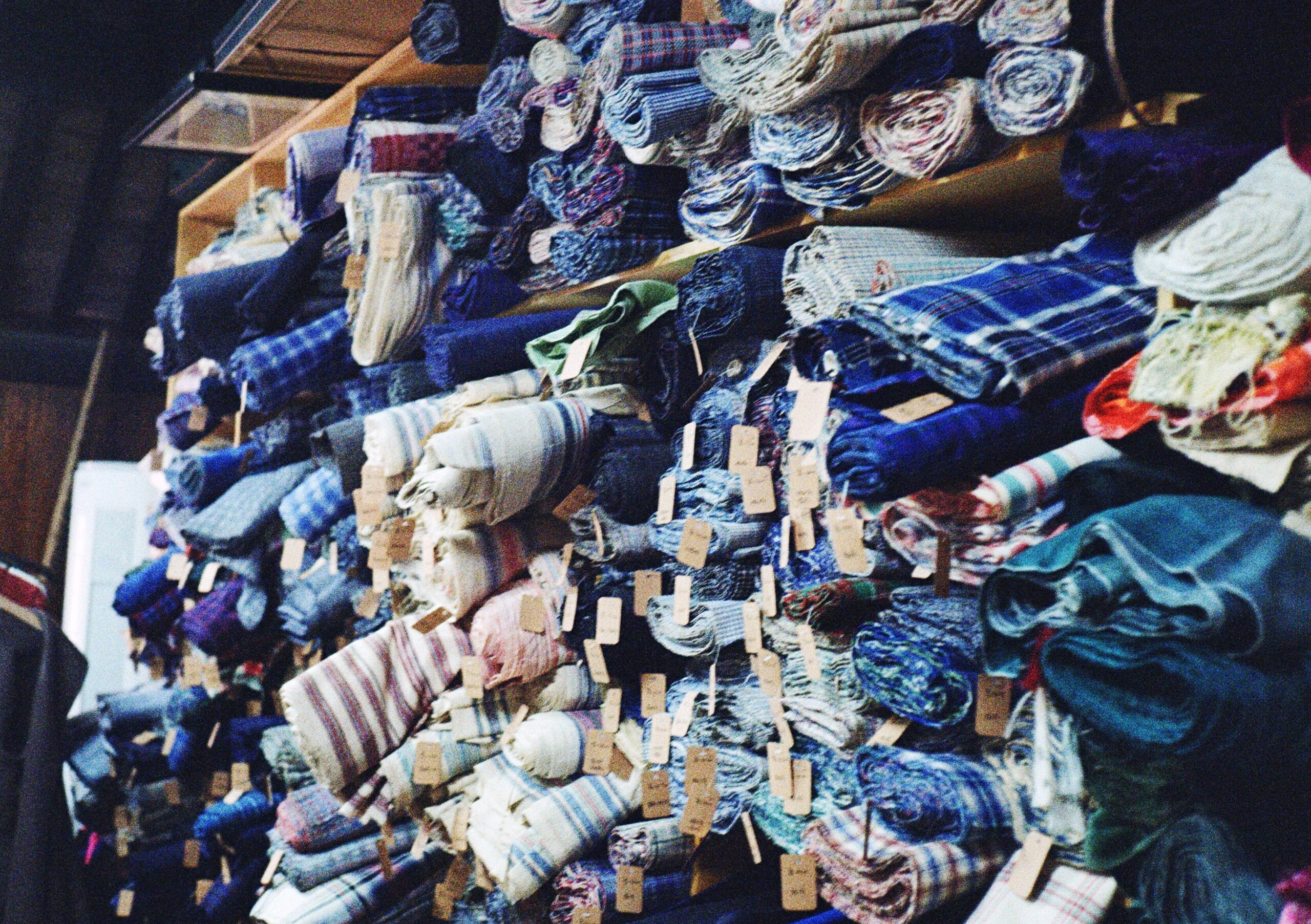
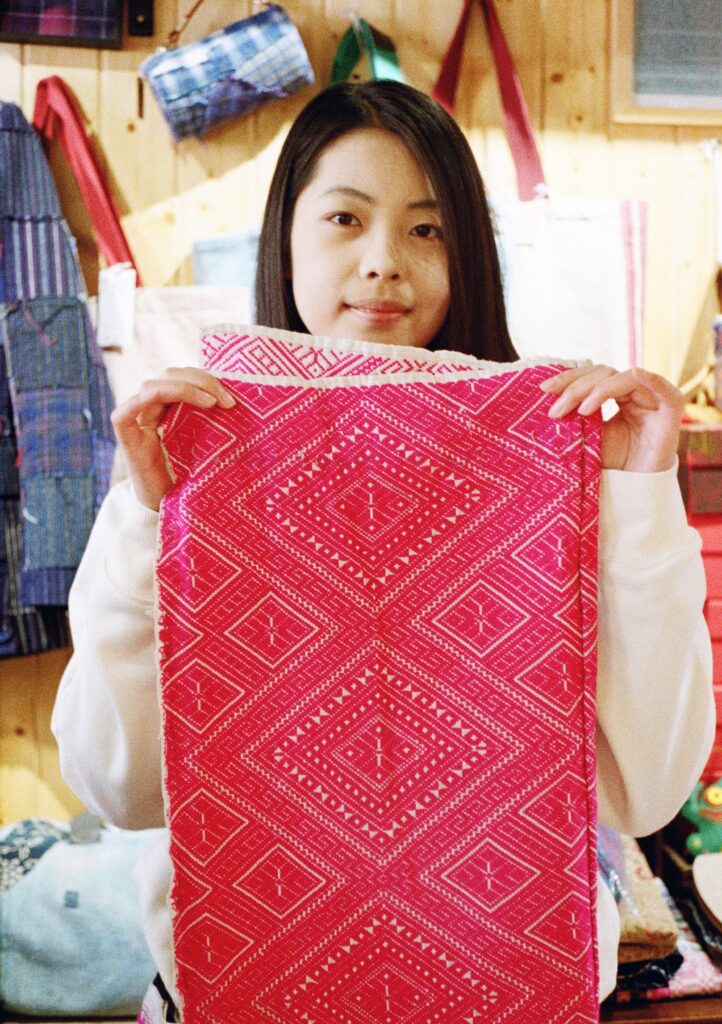
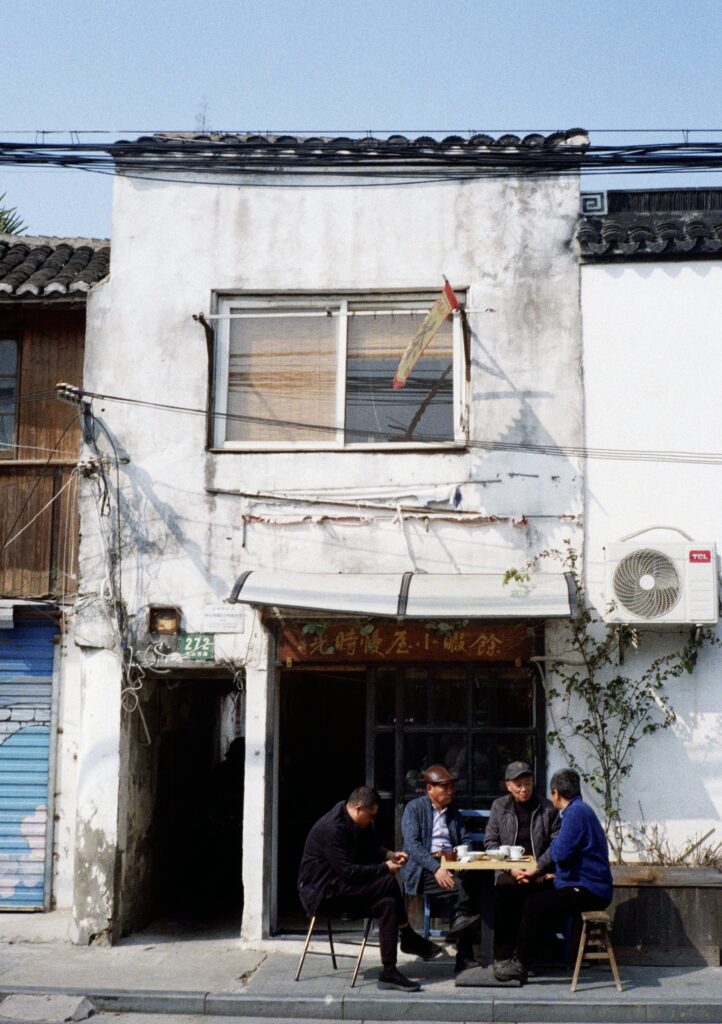
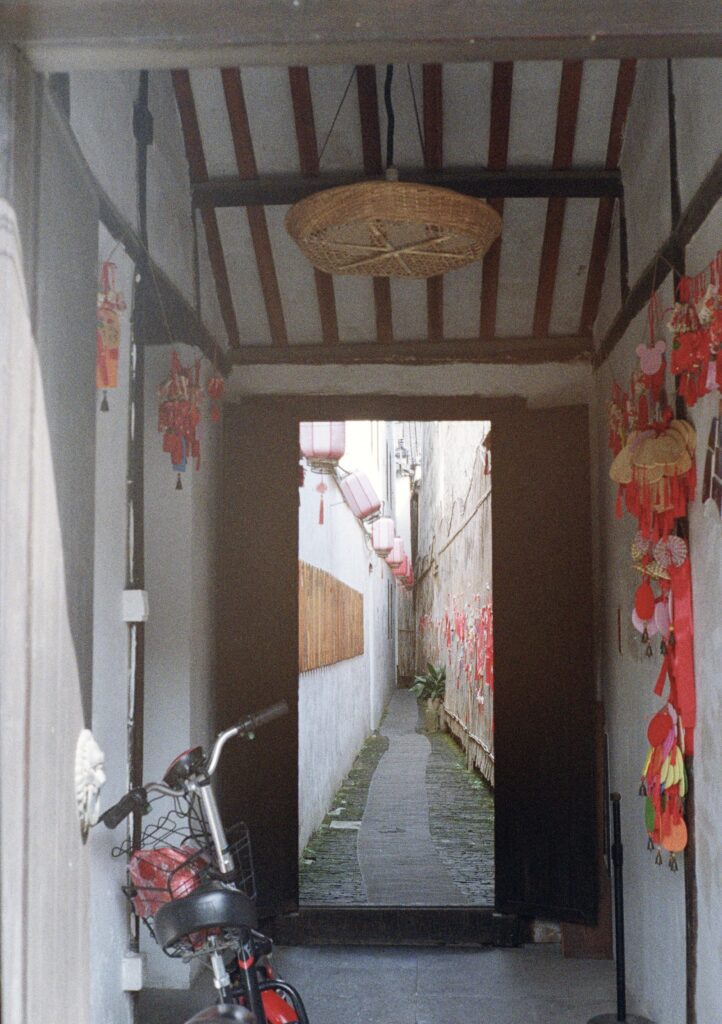
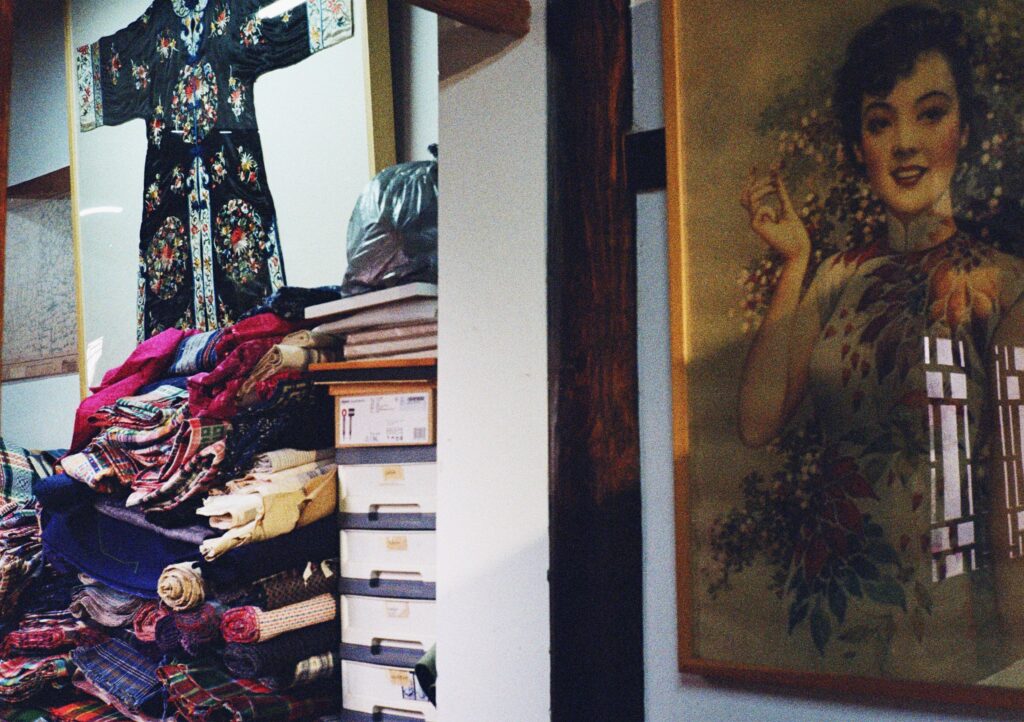
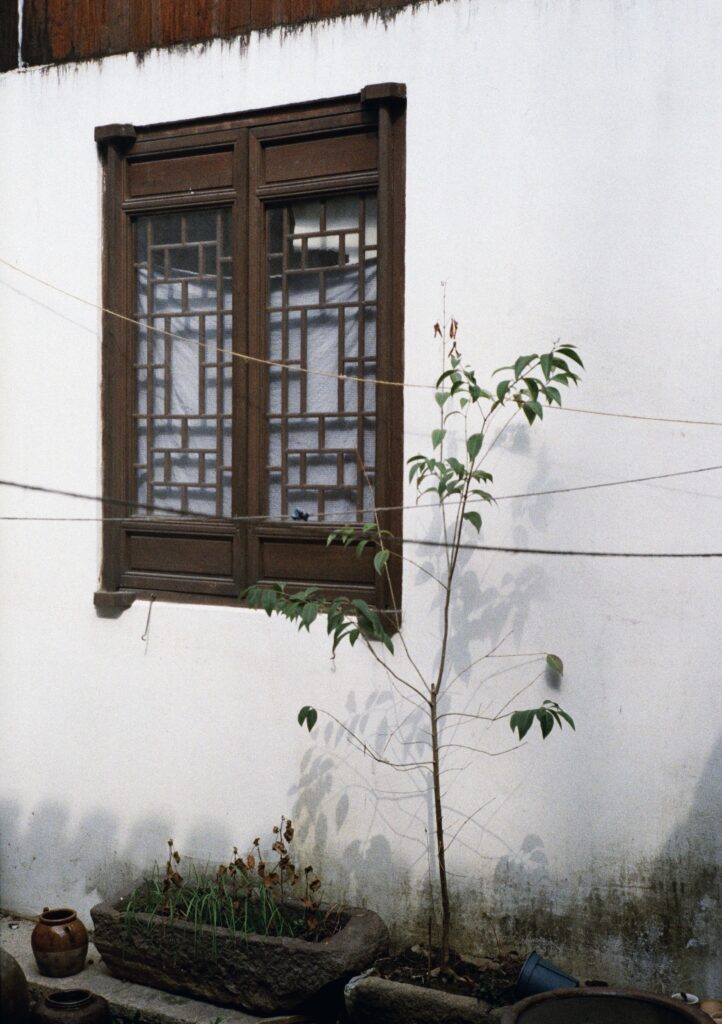
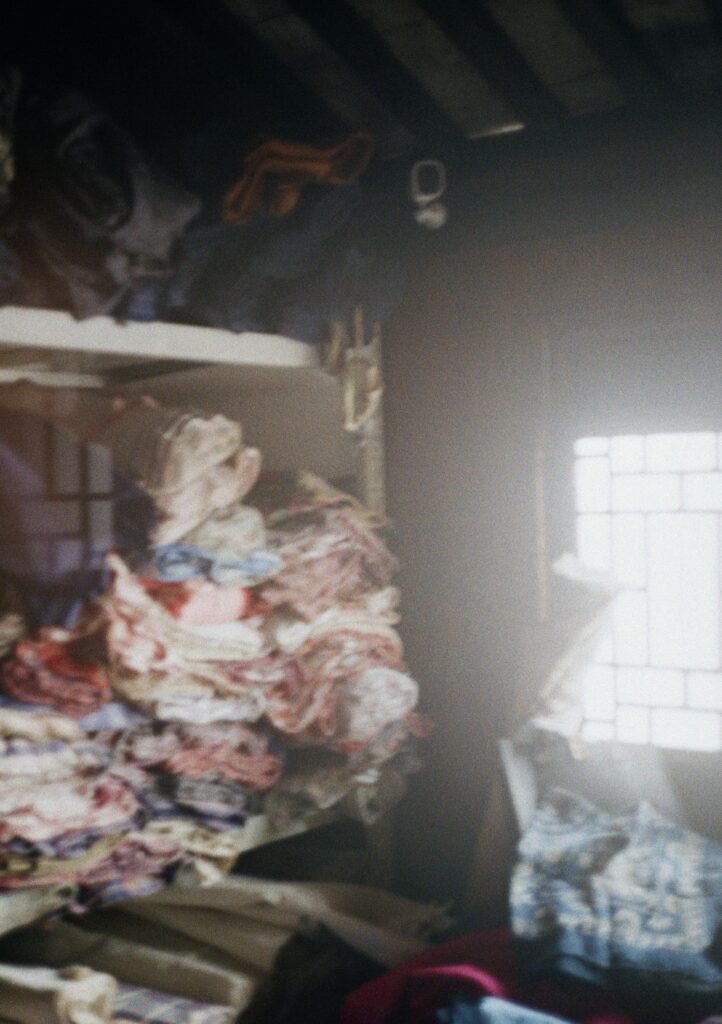
Before Shanghai became today’s metropolis, it was renowned across Asia and Europe for its handmade textiles, which are called Songjiang Cotton Fabric (松江棉布). This project focuses on Yarn-dyed Homespun (色织土布), where patterns emerge through the handweaving of pre-dyed yarns.
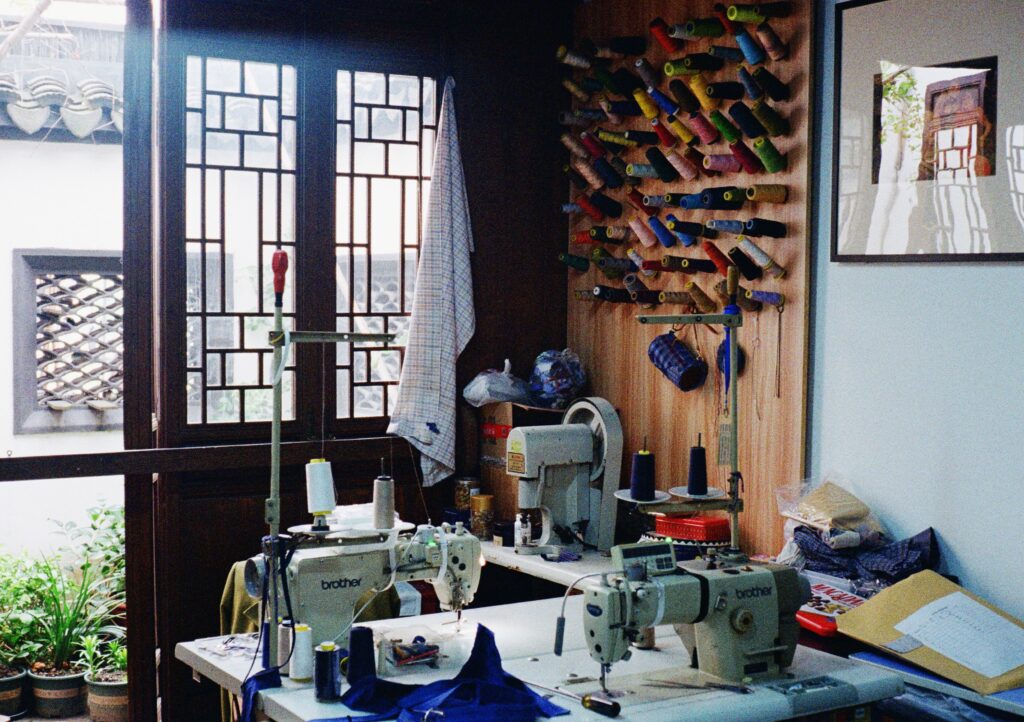
Through field investigation and close observation, I witnessed how this craft carries traces of time — connecting past and present weavers, and revealing the shifts in clothing and industry behind it. Once widely recognized, the technique has now faded from public memory and faces extinction.
Historically, Chinese women were the main weavers in a social structure described as “men farmed, women wove (男耕女织).” Songjiang cloth represents their labor and emotion. Each bolt, taking over half a month to complete, reflects the weaver’s state of mind: loose or tight, logical or spontaneous. Like a symphony, with women’s hands as the conductor, every textile becomes unique and readable.
This series, combining analogue photography and video, aims to reawaken the presence of this craft in our collective memory. The fabric’s warmth lies not only in its texture, but also in its role as a recorder of women’s lived experiences, making its preservation essential in our time.
Special thanks to: Songjiang Cloth Culture Exhibition Hall and my dear friends working together in the ICH investigation team. I owe this project to them. (2024)